 Managment@10min.us
 Mon - Sat 09:00AM - 06:00PM
Most brake problems start with a noise, a change in pedal feel, or a slight pull to one side, not emergencies. A symptom can point to a likely brake component, but an inspection tells you what's actually wrong.
The component’s condition, not its mileage or guesswork, should help you decide whether a repair is needed and exactly which part requires repair. That helps answer the important questions: What's happening? What caused it? And what should you do next?
Let us answer these questions, and many more, in this ultimate guide to vehicle brakes.
How Your Car's Brake System Works
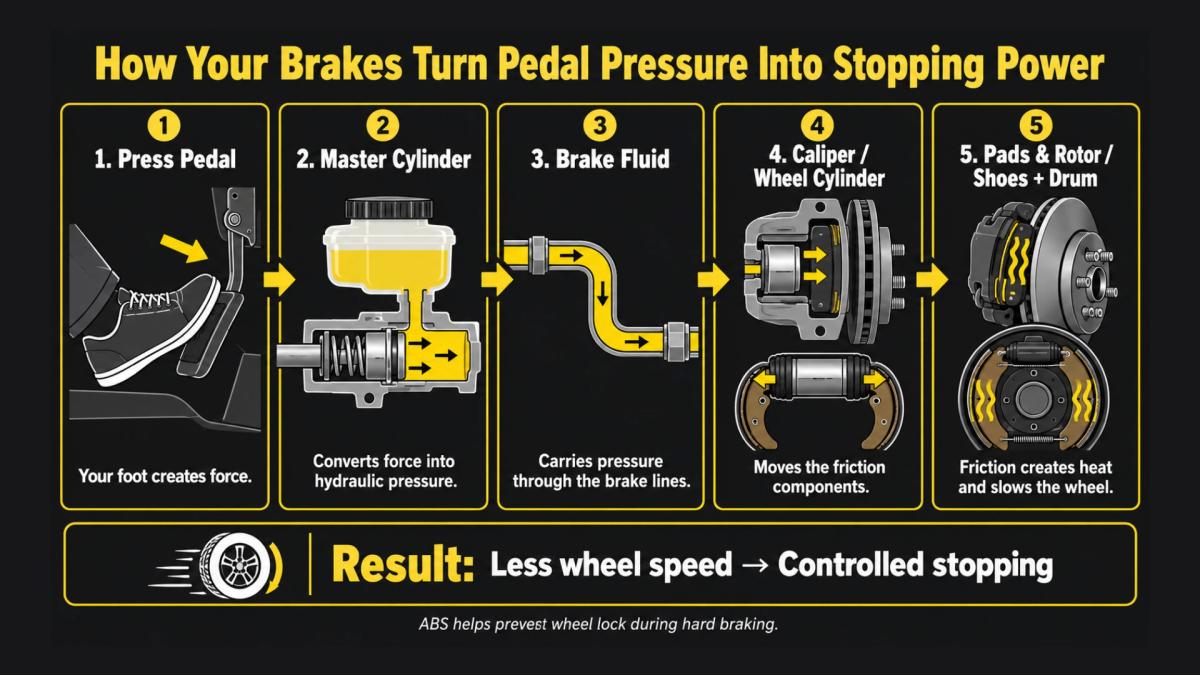
When you press the brake pedal, your car uses fluid pressure to turn the push of your foot into friction. That gently slows and safely stops the wheels. Let’s explain it a bit.
How Braking Turns Pedal Pressure Into Stopping Power
Pressing the brake pedal pushes a piston inside the master cylinder. That piston pressurizes brake fluid and sends it through brake lines to each wheel. Most vehicles use a brake booster to multiply the force from your foot, so pedal pressure doesn't need to be extreme.
At each wheel, that hydraulic pressure moves a caliper or wheel cylinder. Friction material presses against a spinning rotor or drum, and that friction converts motion into heat. That’s how a moving vehicle slows down.
The Main Parts of a Brake System
A typical brake system usually includes brake pads, rotors, calipers, brake lines, and a master cylinder up front. Many vehicles use brake shoes, drums, and wheel cylinders on the rear axle instead. Anti-lock braking system (ABS) sensors and a parking brake round out most setups.
At the wheels, friction material (pads or shoes) presses against a rotating surface (a rotor or drum). Both sides wear over time, and how fast depends on driving habits, vehicle weight, and component quality.
Not Sure What Your Brakes Need?
If your brakes feel different, you don’t have to guess which component is causing the problem. A brake inspection can check the pads, rotors, fluid, and other components so you know what needs attention. Schedule an inspection at 10 Minute Oil Change if you’re in Plano or Garland.
Disc Brakes vs. Drum Brakes
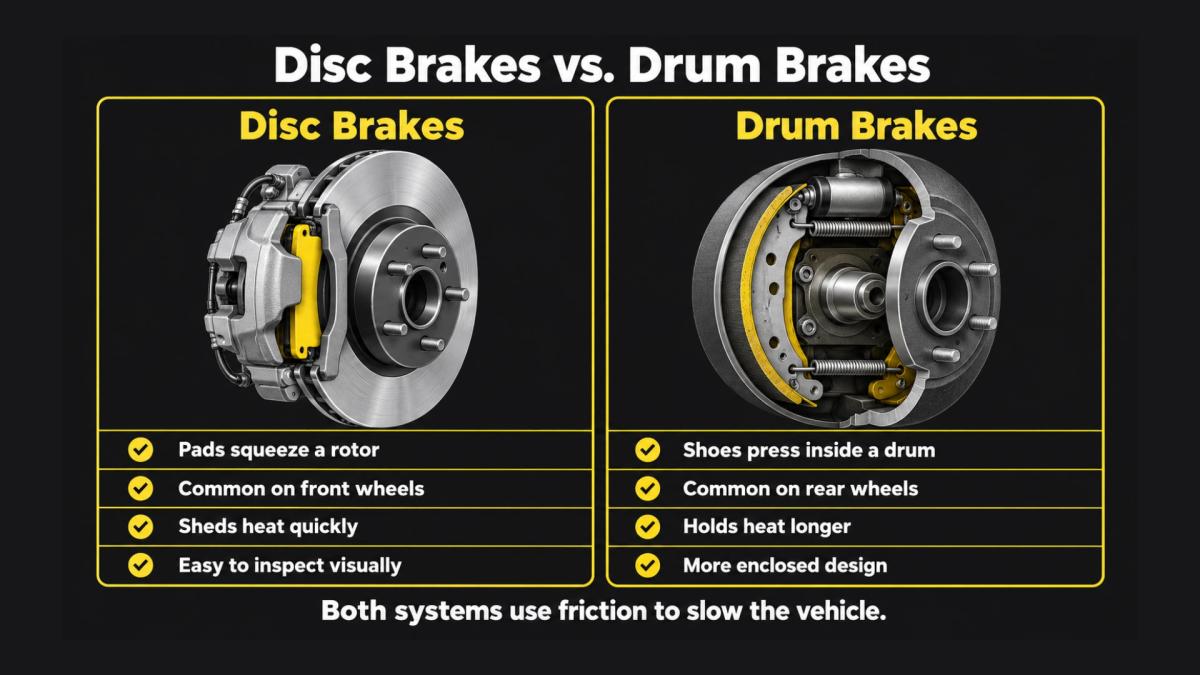
Disc brakes squeeze pads against a spinning rotor to slow your wheel, while drum brakes push curved shoes outward against the inside of a rotating drum. Both keep you safe, but disc brakes give smoother, more confident stopping, especially in wet or heavy braking.
How Disc Brakes Work
Disc brakes use a caliper that squeezes two pads against a flat, spinning rotor. Most vehicles use disc brakes on the front axle, since front brakes handle more of the stopping force. Disc brakes shed heat quickly, which generally helps them resist brake fade.
How Drum Brakes Work
Drum brakes use curved shoes that press outward against the inside of a spinning drum. A wheel cylinder, powered by brake fluid, pushes the shoes apart. Many vehicles still use drum brakes on the rear axle, where less stopping force is usually needed.
Brake Shoes vs. Brake Pads
Both use friction material, but they wear against different surfaces. Shoes press outward against a drum's inner wall, while pads squeeze a flat rotor from either side. Because the contact geometry differs, shoe and pad wear rates aren't comparable between vehicles.
Drum Brake Adjustment and Maintenance
As shoes wear, the gap between shoe and drum grows, which can make the pedal feel lower than usual. Many drum brakes include a self-adjusting mechanism, though some still need periodic manual adjustment. A technician checks this as part of routine drum brake service.
The Role of ABS in Modern Braking
ABS prevents a wheel from locking up during hard braking by pulsing pressure when a sensor detects a skid. That helps preserve steering control during an emergency stop. Stopping distance depends heavily on tires, road conditions, and overall brake condition.
Brake Pads: Wear, Inspection, and Replacement Decisions
Brake pads don’t all wear at the same rate, and that’s normal. Your driving habits, road conditions, and the type of vehicle all play a part. The important thing is knowing what affects wear and how to tell when your pads need attention.
What Affects How Fast Pads Wear
Pad wear varies by vehicle, pad material, and driving style. Stop-and-go traffic, heavy loads, towing, and hilly routes speed up wear. Steady highway driving is usually easier on pads. That’s why a single mileage figure rarely applies across different drivers.
How to Check Pad Condition
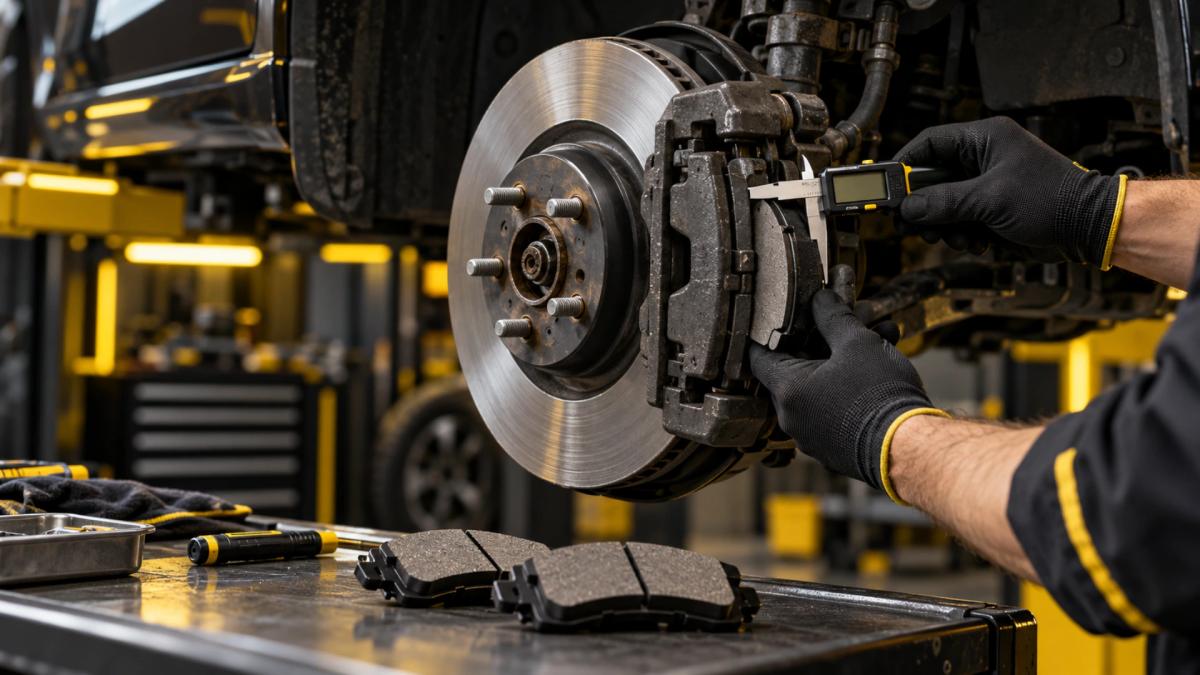
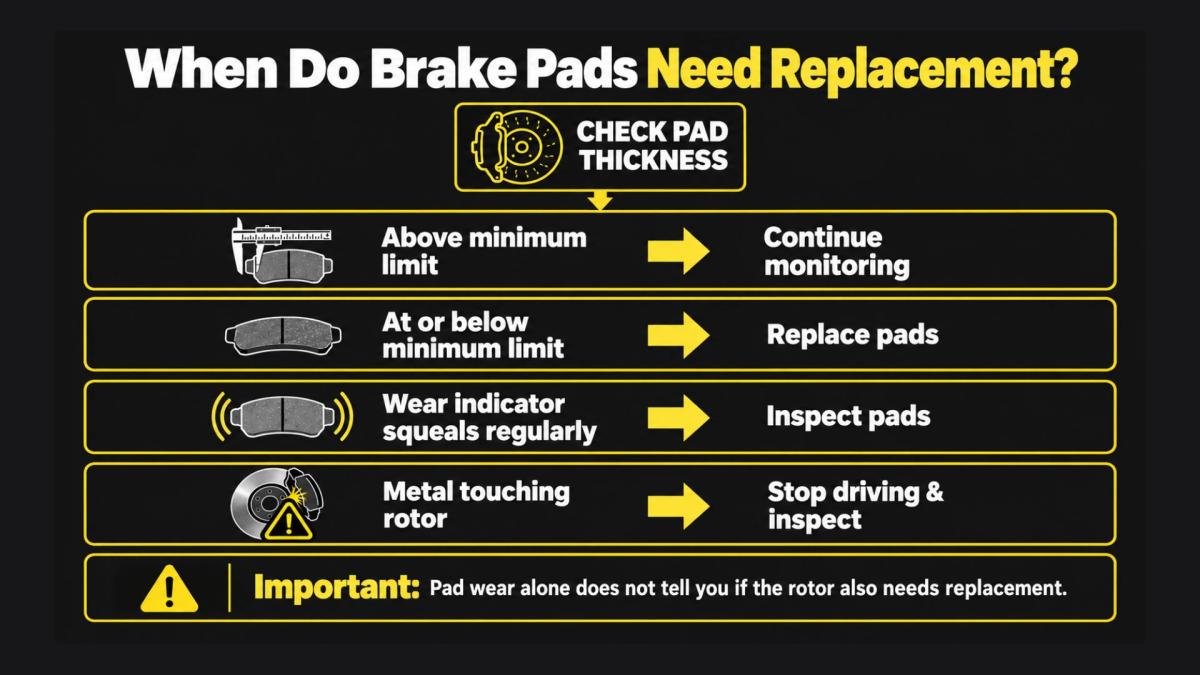
Many wheel designs let you peek at the brake pads through the rim’s gaps. But for an exact check, a technician will remove the wheel and measure the pad thickness. Every car maker sets a minimum safe thickness for the pads, which you can find in the service manual.
The inspection compares what’s left against that limit. If the pads are at or below that minimum, it’s time to replace them; if there’s still enough material, you can safely wait a bit longer.
Pad Wear Indicators and Noise
Many pads include a small metal tab that contacts the rotor once friction material gets thin, producing a high-pitched squeal on purpose. This noise helps get your attention before the pad wears further. It's a wear signal, not confirmation of a failure on its own.
How to Know When You Need New Brake Pads
Brake pads should be replaced when their thickness reaches:
- The manufacturer’s minimum limit,
- When the wear indicator starts squealing regularly,
- Or if you can see metal rubbing directly on metal.
A technician can check which sign applies to your car and tell if the rotors have started to get damaged. Replacing the pads as soon as they are near that minimum thickness means you need to change the pads to keep the repair easy and less costly.
Choosing Pad Material and Quality
Ceramic brake pads are usually quieter and create less visible dust. That makes them a clean and calm choice for everyday driving. Semi-metallic pads manage heat better during long or heavy braking, which can be ideal for tougher driving conditions.
Original Equipment Manufacturer (OEM) pads match your car’s exact original specs. Good-quality aftermarket pads can also offer similar performance at a lower cost, though quality can vary by brand.
Prices usually reflect the materials and how long the pads will last, but not always. So it’s wise to ask your technician what each pad is designed for before deciding.
Making Brake Pads Last Longer
Braking early and gradually, instead of hard and late, produces less heat and wear than repeated hard stops. Leaving the extra following distance gives you room to slow down smoothly. Reducing unnecessary cargo weight also eases the load on the whole brake system.
Brake Rotors: Wear, Warping, Rust, and Replacement Decisions
Your brake pedal relies on more than pads and rotors to stop the car. Brake fluid, lines, hoses, and other hydraulic parts transfer the pressure from your foot to the wheels. When something goes wrong in this system, the pedal can feel different, and braking performance can suffer.
What Causes Rotor Wear and Warping
Rotor wear increases with heat, driving style, and pad condition. Extreme heat from hard braking or towing can cause uneven thickness, sometimes described as "warping." Driving on worn-out pads can speed up rotor damage. Rotor wear isn't caused by heat alone; it also depends on how the pad contacts the rotor.
Warped Rotor Symptoms
A pulsing brake pedal or a shaking steering wheel during braking often means there’s a problem with a rotor. But wheel balance or suspension issues can feel similar. Uneven rotor thickness is the most common cause, but rust buildup or a stuck caliper can also produce vibration. You should have an inspection to actually confirm the issue.
Rotor Thickness and Resurfacing vs. Replacement
Every rotor has a minimum safe thickness, usually stamped on the rotor's edge. A rotor still within that spec and free of deep grooves may sometimes be resurfaced. You can do it by removing a small amount of material. A rotor that's too thin, cracked, or heat-damaged after resurfacing needs replacement instead.
Rotor Rust: Normal Wear or a Problem?
Light surface rust after sitting overnight, especially in humid weather, is normal and usually clears within the first few stops. Rust that's thick, flaking, or paired with noise or vibration is a different situation. Again, get your car inspected to learn about its braking performance.
Do You Need New Rotors, or Just Pads?
This decision comes down to measured rotor condition, not pad wear alone. If a technician measures rotors within spec and free of scoring, replacing pads alone is often enough. If rotors are thin, deeply grooved, or unevenly worn, plan on replacing pads and rotors together.
Drilled and Slotted Rotors
Drilled and slotted rotors help shed heat and gas buildup under extreme use, such as towing or performance driving. For daily commuting, many drivers see little practical difference compared with standard rotors. And the added cost may not be worth it for every vehicle.
Brake Fluid, Hydraulics, and Brake Lines
Your brake pedal relies on more than pads and rotors to stop the car. Brake fluid, lines, hoses, and other hydraulic parts transfer the pressure from your foot to the wheels. When something goes wrong in this system, the pedal can feel different, and braking performance can suffer.
What Brake Fluid Does
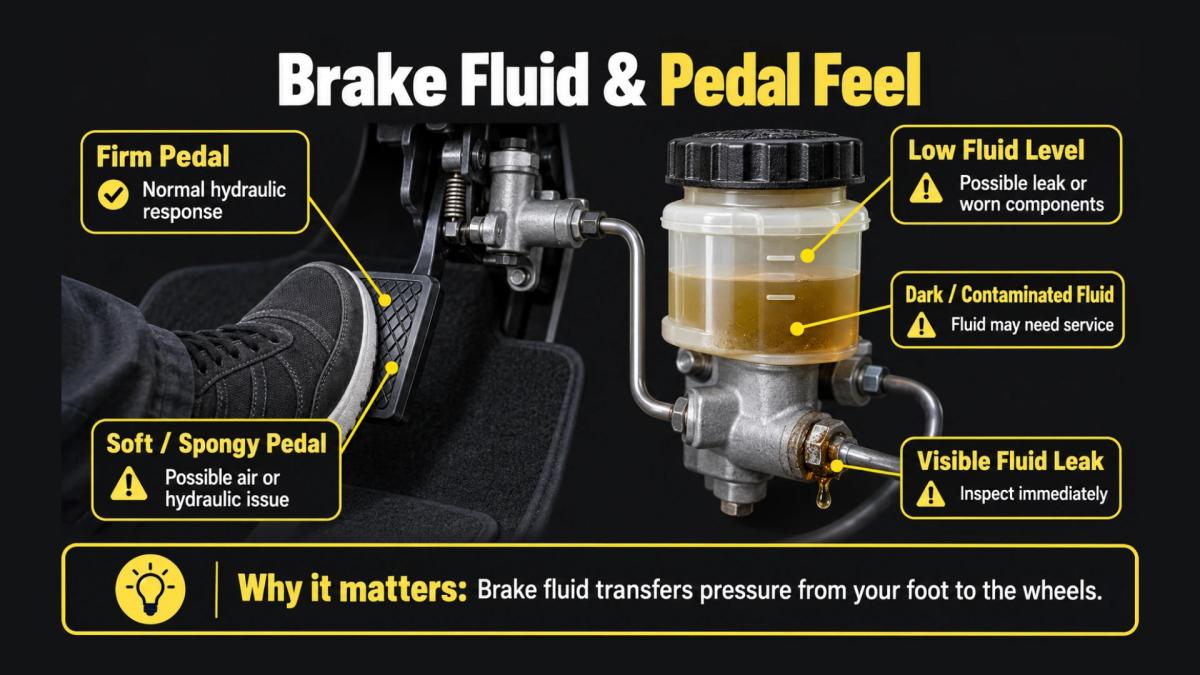
Brake fluid transfers the pressure from your foot into the force that moves calipers and wheel cylinders. Because brake fluid is incompressible, the transfer happens almost instantly. Air or moisture in the fluid interferes with that transfer, which is why fluid condition matters.
Car Brake Fluid Types
Most vehicles specify a DOT-rated glycol-based fluid, such as DOT 3 or DOT 4, with the exact type mentioned in the owner's manual. Some higher-performance or specialty vehicles use different specifications.
Checking Brake Fluid and Signs of Trouble
The fluid reservoir usually sits near the back of the engine bay, with minimum and maximum lines marked on the side. Fluid that looks dark, cloudy, or noticeably low may mean contamination or a leak. A soft or spongy pedal is another sign that fluid or hydraulic condition may need attention.
Brake Fluid Leaks
A leak can originate at a line, hose, caliper, wheel cylinder, or master cylinder. It often shows up as a dropping fluid level, a softening pedal, or a small puddle near a wheel. A suspected leak calls for immediate inspection because fluid loss reduces braking power.
Brake Fluid Flush
Brake fluid absorbs moisture over time, which can lower its boiling point and affect hydraulic performance. A flush replaces the fluid throughout the system and may be recommended on a schedule set by your manufacturer, or sooner if fluid looks dark or contaminated.
Brake Bleeding
Bleeding removes air that's entered the lines, usually after a repair, a fluid leak, or opening the hydraulic system for service. Trapped air compresses under pressure, which is what causes a soft or spongy pedal. A firm pedal after bleeding confirms the air has been cleared.
Brake Line Problems and Repairs
Brake lines and hoses can corrode, crack, or get damaged over time, especially with road salt exposure or age. A damaged line often causes a leak, a soft pedal, or uneven braking between wheels. Repair means replacing the affected section and bleeding the system afterward.
Common Brake Symptoms and What They May Mean
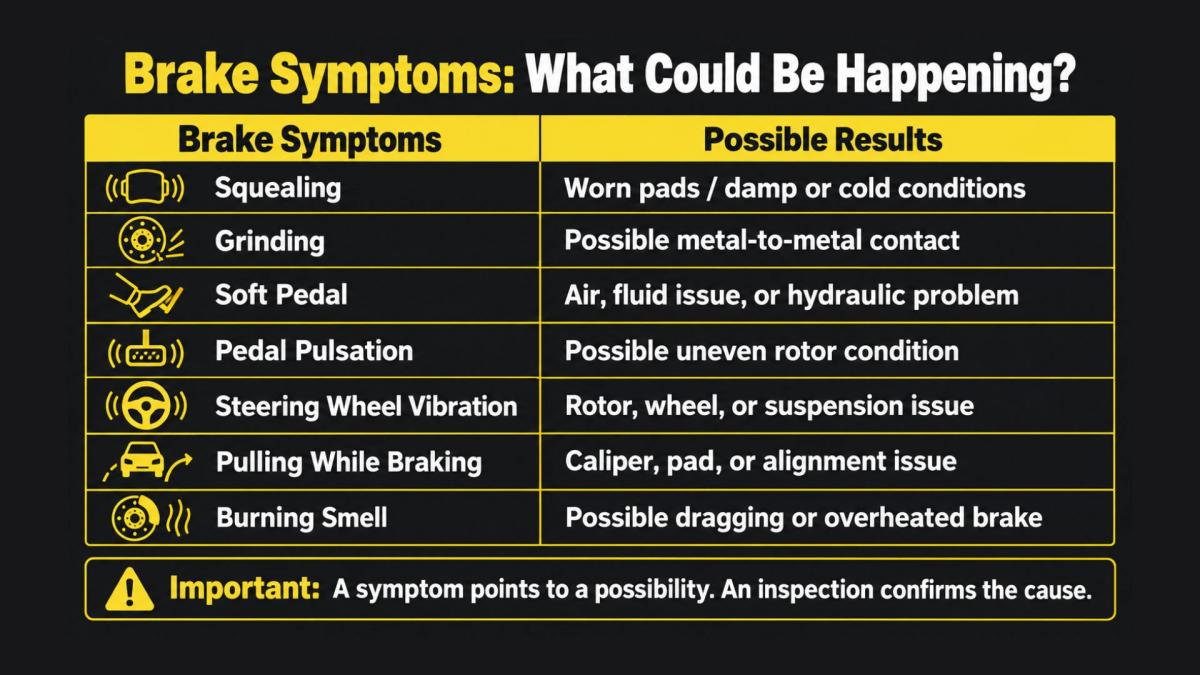
Brake problems often give you clues before they become bigger issues. The sound, pedal feel, vibration, or change in how the car stops can point toward different causes. Knowing what these symptoms may mean can help you decide when an inspection makes sense.
Squeaking and Squealing
A high-pitched squeal often comes from a pad wear indicator, meaning pads are approaching their replacement point. Cold or damp weather can also cause a brief squeal that clears after a few stops. An inspection checks pad thickness to confirm whether the noise reflects normal wear or something further along.
Grinding or Scraping
Grinding usually means friction material is gone and metal is contacting metal, which can damage rotors quickly. Because continued driving in this state can turn a pad job into a rotor or caliper repair, that usually calls for immediate inspection.
Soft or Spongy Brake Pedal
A soft or spongy pedal can mean air in the lines, low or contaminated fluid, or a hydraulic issue elsewhere in the system. The exact cause depends on the vehicle and any other symptoms. An inspection confirms if the fix is bleeding, a fluid top-off, or a component repair.
Vibration, Pulsation, or Pulling
Pedal pulsation or steering wheel vibration during braking commonly points to uneven rotor wear, though wheel balance issues can feel similar. A car pulling to one side may signal a stuck caliper, uneven pad wear, or an alignment issue unrelated to brakes. A technician can separate these possibilities during inspection.
Sticking or Stuck Brake Calipers
A caliper that doesn't fully release can drag against the rotor, causing uneven wear, pulling, or a burning smell. This often stems from a seized slide pin or a failing piston. Left unaddressed, a stuck caliper can wear a rotor unevenly and reduce fuel economy.
Brake Fade
Brake fade is a temporary loss of stopping power from overheated pads and rotors. That’s usually common during long descents, towing, or heavy repeated braking. Downshifting to use engine braking and avoiding constant light pedal pressure on descents both help manage the heat that causes it.
Hearing a New Brake Noise or Feeling Something Different?
A squeal, grinding sound, vibration, or soft pedal can have several possible causes. Our team at 10 Minute Oil Change in Garland or Plano can inspect the brake system and help identify what actually needs attention. You’ll get a clearer picture of the condition of your brakes before deciding on a repair or replacement.
How to Tell If Your Brakes Need Attention
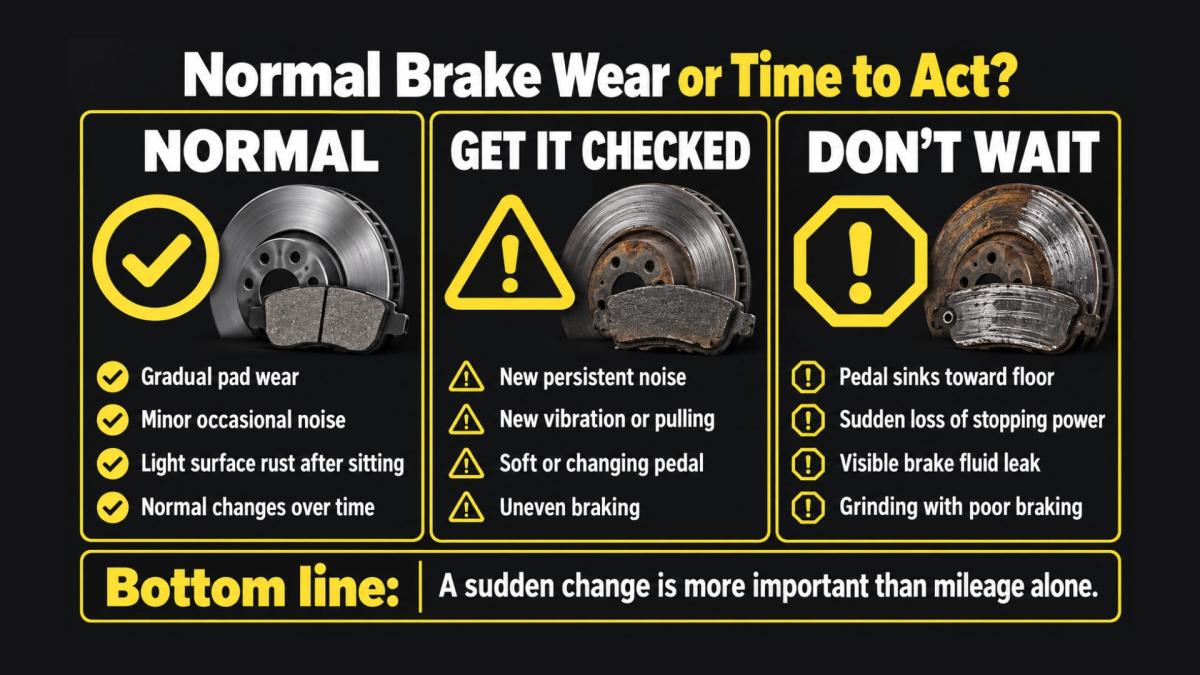
Brake wear happens gradually, but some changes deserve more attention than others. A new noise, unusual pedal feel, or change in how the car stops can tell you something has changed. The key is knowing which signs you can monitor and which ones need a prompt inspection.
Normal Wear vs. Signs That Need Attention
Gradual pad wear and occasional minor noise are a normal part of owning a vehicle. A change from that baseline is what usually signals it's worth having the system checked. That may include a new noise, a different pedal feel, or a pull that wasn't there before. The symptom sections above cover what specific changes tend to mean.
Signs You Should Not Wait
Don’t wait if a pedal sinks toward the floor, a sudden loss of stopping power, or there is a visible fluid leak. These point toward hydraulic failure rather than gradual wear, and they affect how safely the vehicle can be driven at all. Get the vehicle inspected before continuing to drive on it.
Getting a Professional Brake Inspection
The nonprofit Car Care Council recommends having a vehicle's brake system checked at least once a year as a general guideline. An inspection covers pad and rotor (or shoe and drum) condition, fluid level and condition, and the hoses and lines. How long it takes depends on what the technician finds and current shop volume.
Brake Maintenance: Reducing Unnecessary Wear
Good brake maintenance isn’t about doing more work than necessary. It’s about catching normal wear early and avoiding habits that put extra heat and stress on the system. A few simple checks and driving habits can help your brakes last longer.
Maintenance Schedule Basics
Checking pad, rotor, and fluid condition at routine service intervals, alongside a full annual brake inspection, is good. Your owner's manual may also list a specific fluid replacement interval. Catching wear at these checkpoints tends to keep repairs smaller.
Driving Habits That Extend Brake Life
Braking early and gradually reduces heat and wear compared with hard, late stops. Extra following distance gives you room to slow down smoothly instead of reactively. Avoiding unnecessary extra weight in the vehicle also eases the load on the brakes.
Managing Heat on Hills and When Towing
Long descents and towing generate extra heat, which raises the risk of brake fade. Downshifting to a lower gear lets the engine help slow the vehicle, reducing how much work the brakes alone have to do. Avoiding constant, light brake pressure on a long downhill also helps prevent overheating.
Lug Nut Torque After Brake Service
After any brake or wheel service, lug nuts should be torqued to the manufacturer's specification rather than just snugged down. Under- or over-torqued wheels can cause vibration or uneven rotor wear over time. This is a small step that protects the brake work that was just done.
Repair or Replace a Brake Component?
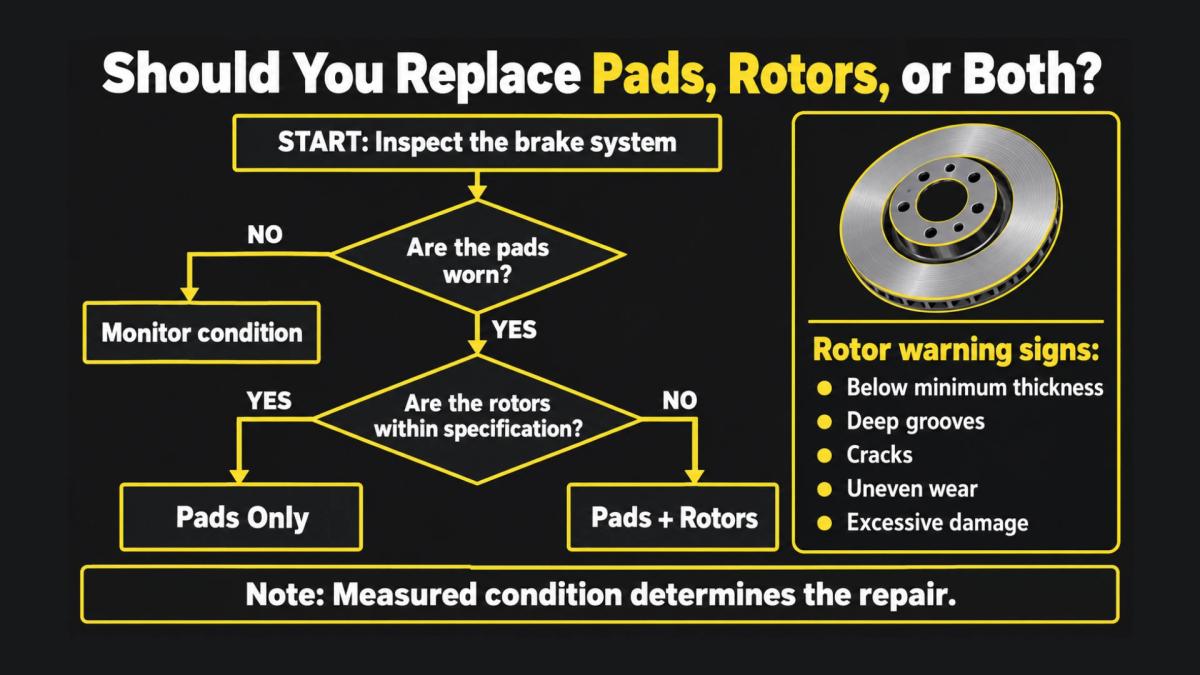
Do you need to repair a car brake component or completely replace it? Well, the symptom points to a component, an inspection checks its condition, and the condition determines the repair. More on this below.
Pads Only vs. Pads and Rotors
If pads are worn but rotors measure within spec and show no scoring, replacing pads alone is often the right call. If rotors are thin, grooved, or unevenly worn, they need to be checked at the same time as the pads. New pads seated against a damaged rotor won't perform as expected.
Resurfacing vs. Replacing Rotors
Resurfacing can extend a rotor's life if it still meets minimum thickness after machining. It isn't always the cheaper option once labor is factored in. And it’s not possible once a rotor is below spec. A technician measuring thickness first is what makes this decision reliable rather than guesswork.
Drum and Shoe Replacement
Drum brake decisions follow a similar logic: shoe thickness, drum diameter, and hardware condition (springs, adjusters) all get checked together. A drum that's been machined too many times, or one that's out of round, may need replacement even if shoes still have life left.
OEM vs. Aftermarket Parts
OEM parts match your vehicle's original specifications, which can simplify the decision if you want a known baseline. Reputable aftermarket parts can be a reasonable, budget-friendly alternative. The quality varies more between brands than with OEM parts. Asking what a specific part is rated for matters more than the OEM-versus-aftermarket label alone.
Brake Repair and Replacement Costs
Brake repairs can range from a relatively small pad replacement to a much larger repair. The final cost depends on what has worn, what needs replacing, and how much labor the job requires. Understanding the main cost factors can help you make sense of an estimate.
What Determines Cost
Cost depends on your vehicle type, the parts needed, pad and rotor material, local labor rates, and how much damage has occurred beyond the original wear item. A repair caught while its pads-only costs less than one where rotors or calipers have also been affected.
General Cost Ranges
These numbers are broad and not the exact costs. Actual pricing depends heavily on your vehicle, location, and parts chosen. So treat these as a starting point for a conversation, not a number to hold a shop to. And you can always contact us for more information.
- Brake pads only: $150–$400 per axle
- Pads and rotors: $300–$800 per axle
- Brake fluid flush: $80–$150
- Full brake job: $600–$1,500+ front and rear
- Brake line repair: $150–$1,000+ depending on damage
How Long Brake Repair Takes
A straightforward pad replacement is usually one of the quicker brake jobs. Adding rotor work, calipers, or a fluid flush extends the appointment, and rust, seized hardware, or parts availability can add more time on top of that.
Vehicle Brake Warranties
Many brake pads and shops offer some form of warranty against premature wear or defects, though terms vary widely by brand and shop. A warranty is worth asking about if you drive heavily or plan to keep the vehicle for years. Confirm what's covered, for how long, and whether labor is included, not just parts.
When to Get Professional Brake Service
A professional brake service usually checks:
- Pad and rotor (or shoe and drum) condition,
- Caliper or wheel cylinder function,
- Fluid condition, and the lines and hoses,
- A test drive to confirm pedal feel.
This professional brake service gives a fuller picture than a visual check alone. And it's what actually turns a symptom into a repair decision, rather than a guess.
Are Your Brakes Feeling Off?
Our team at 10 Minute Oil Change in Garland or Plano can take a look. We offer brake inspections, pad replacement, fluid exchange, and rotor and drum machining, with a free multi-point inspection included. Get to know what your brakes actually need.
Admin
Author